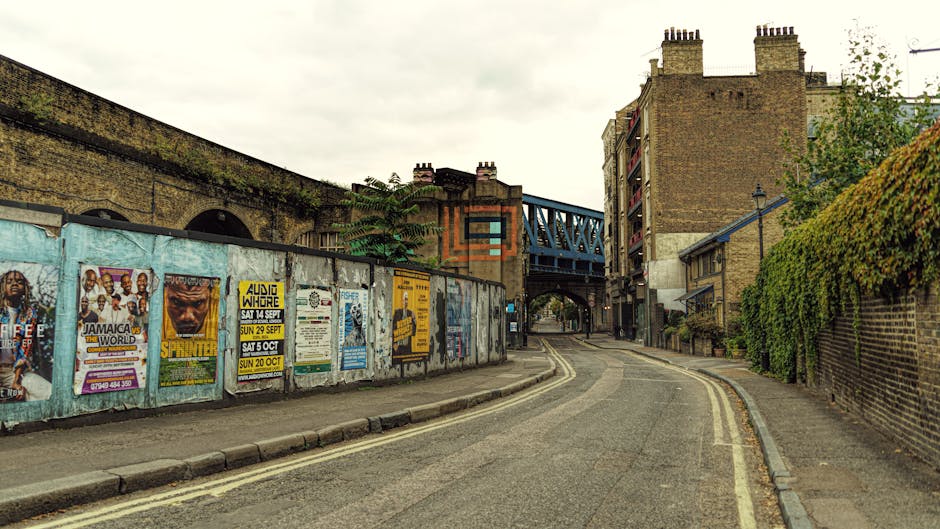
White Post Lane flat removals tips for Hackney Wick moves
Moving out of a flat around White Post Lane can be straightforward on paper and oddly fiddly in real life. Lifts are small, stairwells are tight, parking can be awkward, and the timing of a Hackney Wick move often feels like it is running a few minutes faster than you are. That is exactly why White Post Lane flat removals tips for Hackney Wick moves are worth getting right before the first box is lifted.
In this guide, you will find a practical, local-minded approach to planning a flat move with less stress and fewer surprises. We will look at what makes the area different, how a flat removal usually works, which options suit different kinds of moves, and what to do if you need extra storage, packing help, or a smaller vehicle for a tight street. Nothing fluffy. Just the useful stuff that actually helps on moving day.
If you are moving from a studio, a top-floor flat, a canal-side apartment, or a converted building with narrow access, these tips should save you time, energy, and a fair bit of unnecessary lifting. And yes, your back will probably thank you.
Why White Post Lane flat removals tips for Hackney Wick moves matters
White Post Lane sits in a part of Hackney Wick where movement can be deceptively tricky. You might be dealing with shared entrances, loading restrictions, busy roads at the wrong time of day, or a building layout that looks simple until a sofa reaches the landing. That is why a good flat-removal plan matters. It is not just about carrying things from one place to another; it is about controlling the little things that create stress.
In this kind of move, timing and access often matter more than brute strength. A well-packed flat can still become a headache if the van cannot stop close enough, if the route from the front door to the vehicle is longer than expected, or if the lift is booked at the same time as everybody else's. Sounds familiar? Most flat moves do.
There is also the emotional side. Flat moves in London can feel rushed, especially if you are balancing work, a lease deadline, or a same-day handover. A sensible plan gives you breathing room. It helps you move methodically rather than in that slightly panicked, "where did the kettle go?" way that nobody really enjoys.
For people who want a more structured move, it can also help to compare services such as flat removals and broader removals support so you can choose the right level of help for the size of the job.
How White Post Lane flat removals tips for Hackney Wick moves work
At a practical level, the process starts with understanding the flat, the access, and the volume of items. Once you know those three things, the rest becomes much easier to organise. A move from White Post Lane is usually more efficient when you break it into stages: assess, sort, pack, protect, load, transport, and unload.
The best flat moves are rarely the most dramatic ones. They are the ones where the boxes are labelled clearly, furniture is disassembled at the right time, and the van arrives when the building access is actually usable. This is the unglamorous part, but it is also the part that keeps the day calm.
If the move involves a smaller load, a short route, or only a few large items, a man and van arrangement can make sense. For slightly more awkward jobs or when you need to split items across short-term storage and the new flat, the combined approach offered by removals and storage can be the more flexible option.
In real terms, "how it works" is simply this: the more information you give the move, the better the move behaves. That includes stair count, parking details, fragile items, and whether there is a sofa that needs to be angle-danced through a doorway. We have all seen one of those.
Key benefits and practical advantages
There are a few clear reasons to use a structured approach for a Hackney Wick flat move instead of winging it and hoping the lift behaves.
- Less damage risk: Better packing and better handling reduce the chance of scratched furniture, cracked glass, or bent lamps.
- Faster loading: When boxes are grouped by room and weight, the van can be loaded in a more logical sequence.
- Less lifting stress: A smaller, smarter load plan means fewer awkward trips and fewer "just one more thing" moments.
- Better access planning: White Post Lane can require careful vehicle positioning, so knowing the approach matters.
- More control over the day: Clear timing removes a lot of mental noise. That matters more than people think.
There is also a hidden advantage: you make decisions earlier. If you know a bulky item will not fit in the lift, you can plan it. If you know the new place has no storage, you can decide whether short-term storage is needed. That kind of thinking stops the move from turning into a chain of last-minute improvisations.
Truth be told, the best move days often look a bit boring from the outside. That is usually a good sign.
Who this is for and when it makes sense
These tips are especially useful if you are moving from a flat in or near White Post Lane and any of the following sound familiar:
- you live in a studio, one-bed, or compact two-bed flat;
- your building has stairs, narrow turns, or a lift with limited space;
- you have a few heavy pieces but not enough for a full-scale lorry move;
- you need to move quickly between tenancies;
- you are a renter who wants to hand the property back in good condition;
- you are downsizing and need to store some items for later;
- you are a student or young professional moving on a tighter budget;
- you are moving part of a household, not the whole thing.
This approach also suits people who are not entirely sure what service they need yet. Maybe you do not need full house removals, but you do need help moving furniture and a few packed boxes. Or perhaps you want to keep things simple with small removals because the job is manageable, just not quite manageable on your own.
That is the honest sweet spot for many Hackney Wick moves. Not huge. Not tiny. Just slightly awkward enough to deserve a plan.
Step-by-step guidance
Here is a practical step-by-step method that works well for most flat removals in this part of East London.
- Walk the route first. Check the path from the flat to the street. Look for tight corners, steps, door widths, and anything that could slow down a trolley or sofa.
- Measure your awkward items. Sofas, mattresses, wardrobes, and desks are the usual troublemakers. If in doubt, measure them before move day, not during it.
- Sort what is going. Keep, donate, recycle, store, and dispose are the four or five piles that make decisions easier. It sounds obvious. Still worth doing.
- Pack by weight and fragility. Heavy items go in smaller boxes. Light but delicate items get cushioning. Mixing the two is asking for trouble.
- Label each box clearly. Room name, contents, and a quick "fragile" note if needed. You want to be able to drop boxes in the right place without opening every single one.
- Disassemble large furniture early. Beds, tables, and shelving are easier to move in parts. Keep screws and fittings together in sealed bags.
- Plan loading order. Put large, sturdy items in first, then lighter boxes, then fragile items that need careful placement.
- Protect the building. Door frames, communal areas, and stair rails can get marked easily. Blankets, wrap, and sensible handling reduce complaints and delays.
- Confirm the handover timing. If keys, inventory checks, or access windows are tight, build a buffer into the schedule.
- Have a backup plan. If the flat is more cluttered than expected or you need a pause between properties, storage can save the day. Not glamorous, but very useful.
If you want help with the packing stage itself, packing services can save a lot of time and reduce breakages. For items that do not need to travel immediately, self storage or mobile self storage may be worth considering, especially during a chain move or renovation gap.
A good rule? Pack as though the box will be dropped once. Hopefully it will not be, but it is better to be pleasantly surprised than disappointed.
Expert tips for better results
Over time, a few habits make flat removals noticeably easier. They are small things, but they stack up.
1. Book the day around access, not wishful thinking
If the street is likely to be busy, or if loading close to the building is difficult, plan your main lifting window carefully. Early starts are often calmer, though not always popular. To be fair, nobody loves a dawn move, but it can save an hour of frustration later.
2. Keep a "last off, first on" essentials bag
Put kettle, chargers, toiletries, keys, some snacks, and a change of clothes in one bag. It sounds basic because it is basic. Yet it prevents that horrible moment when you arrive and realise the phone charger is somewhere inside box 14.
3. Photograph tricky setups before dismantling
Take quick photos of bed frames, wire shelving, wardrobes, and any wall fixings. You do not need a professional setup. Just enough to remember how the thing went together when you are tired and slightly hungry later in the day.
4. Use storage to avoid rushed decisions
If you are not sure whether to keep a large item, put it into storage rather than forcing a final decision under pressure. A short pause can be helpful, especially if the new flat is smaller. Options like long-term storage or household storage are worth weighing up when the handover date and the move-in date do not line up neatly.
5. Keep fragile items visible in the truck plan
Anything glass, mirrored, or sentimental should be loaded where it can be handled carefully. That does not mean it needs a special speech. It just means it should not be buried under three boxes of books.
And one small personal note: the move day that looks most chaotic at 8:15 a.m. is often the one that finishes most smoothly. Funny how that works.
Common mistakes to avoid
Most move-day problems are not dramatic disasters. They are a series of small avoidable issues that become annoying all at once. Here are the usual suspects.
- Underestimating parking and access: A van nearby is useful. A van several streets away is not.
- Packing too late: Last-minute packing leads to poor box quality and forgotten items.
- Using huge boxes for heavy items: Books and crockery in oversized boxes become awkward fast. Very awkward.
- Forgetting to label rooms: This slows unloading and creates clutter in the new flat.
- Not checking building rules: Some blocks have rules about lifts, parking, or move times. Ignoring them can create friction no one needs.
- Leaving cleaning until the end: If you leave the flat dirty, the final hour becomes stressful.
- Assuming everything fits easily: It may not. Wardrobes often have other ideas.
One thing people often overlook is the difference between "fits on a van" and "fits in a flat route." Those are not the same problem. A sofa can be physically fine for the van and still impossible to turn on the landing. That is the sort of detail that turns a relaxed move into a slow-motion puzzle.
Tools, resources and recommendations
You do not need a van full of specialist gear to move a flat well, but a few simple tools make life easier.
- Sturdy boxes: Use good-quality boxes that hold shape when stacked.
- Packing tape and dispenser: Faster sealing, less faffing about.
- Bubble wrap or paper wrap: For glasses, lamps, and delicate surfaces.
- Marker pens: Clear labels make unloading easier.
- Furniture blankets: Useful for protecting wood, painted surfaces, and corners.
- Tool kit: Screwdriver, Allen keys, tape measure, scissors, and spare bags for fittings.
- Trolley or sack truck: Helpful for heavier boxes and appliance runs.
If you are sorting through items before the move, this is also a good time to think about what should be stored rather than carried straight over. Furniture storage can help if you have a sofa, bed, or table that does not quite fit the next place. For documents, old files, or paperwork you want to keep safe but out of the way, document storage is a sensible, tidy option.
For people moving on a tighter schedule, it can also help to look at local removals if the new property is not far away. Short hops still need structure, but they are usually easier to plan and less expensive to coordinate than a longer move.
Law, compliance, standards, or best practice
For flat removals, there is no need to drown the process in legal jargon, but there are some sensible standards and expectations worth keeping in mind.
First, movers should handle items and property with reasonable care. That means protecting communal areas, avoiding avoidable damage, and taking common-sense precautions around lifting and loading. In the UK, safe lifting is always a practical concern, especially with stairs, awkward turns, or bulky furniture. You do not want anyone trying to heroically carry a wardrobe solo. That usually ends badly, and not in a funny way.
Second, if you are using a removals provider, it is wise to check what level of cover and safety approach is offered. For peace of mind, pages such as insurance and safety and health and safety policy can help you understand how a provider thinks about risk, handling, and responsibility. That does not guarantee a perfect move, obviously, but it does show the basics are being taken seriously.
Third, if your move involves discarded items, recycling, or reducing waste, it is sensible to separate what can be reused or recycled rather than dumping everything together. A cleaner process is usually easier to manage and less wasteful. If sustainability matters to you, a look at recycling and sustainability is a practical next step.
Finally, always read the service terms before booking. It is not thrilling reading, I know. But it is still the place where booking conditions, payment expectations, and responsibilities are usually explained. That kind of clarity matters when timing is tight.
Options, methods, or comparison table
Different flat moves need different levels of support. Here is a simple comparison to help you decide what fits best.
| Option | Best for | Strengths | Limitations |
|---|---|---|---|
| DIY flat move | Very small loads, short distances, minimal furniture | Lowest direct cost, full control | More lifting, more risk, more time pressure |
| Man and van | One- to two-room flats, lighter moves, short local journeys | Flexible, efficient, suited to smaller access routes | May not suit larger multi-room moves with many bulky items |
| Flat removals service | Typical apartment moves with furniture, boxes, and awkward access | Better handling, faster loading, less stress | Usually costs more than doing it all yourself |
| Removals plus storage | Gap between tenancies, downsizing, renovations, uncertain timelines | Highly flexible, reduces rushed decisions | Requires extra planning and coordination |
There is no single "best" choice for everyone. If you are moving out of a compact flat on White Post Lane and only have a handful of larger items, the simplest route may be enough. If you have a difficult stairwell, a tight timetable, or a lot of furniture, a more structured service usually saves time and energy overall.
Case study or real-world example
Here is a realistic example based on the kind of move many people make in Hackney Wick. A tenant leaving a one-bedroom flat near White Post Lane had a bed frame, sofa, dining table, six boxes of books, kitchenware, and a couple of plants that looked far more dramatic than they were. The main issue was not volume. It was access.
The building had a narrow internal route and a lift that could not comfortably handle the sofa in one piece. Rather than forcing the move, the sofa was dismantled, the table legs were removed, and the boxes were grouped by room. A small vehicle was booked for the job, and fragile items were set aside separately. The tenant also used a short storage option for a few bits that were not ready to go into the new flat on day one.
What made the move work? Not luck. A bit of planning. The move started with the awkward items, not the easy ones, and the van was loaded in a sensible order. By late afternoon, the flat was empty, the keys were handed over, and nothing had been broken. Not bad for a day that could easily have gone sideways.
The takeaway is simple: when the access is awkward, the plan matters more than the muscle.
Practical checklist
Use this checklist in the final few days before your move.
- Confirm the moving date and access times.
- Check whether parking or loading space is available near the flat.
- Measure large furniture and compare it with doorways and stairs.
- Decide what will be moved, stored, donated, or recycled.
- Order boxes, tape, wrap, and labels early.
- Pack room by room where possible.
- Keep heavy items in smaller boxes.
- Set aside essentials for the first night.
- Disassemble furniture before move day if needed.
- Protect floors, corners, and communal areas.
- Keep keys, documents, and ID in one safe place.
- Have a backup plan for items that do not fit immediately.
Quick summary: the smoother flat removals are usually the ones where the boring details were handled early. Access checked, boxes labelled, furniture measured, and storage considered before panic sets in. That is the formula.
Conclusion
White Post Lane flat removals do not need to feel chaotic. With the right preparation, the right service level, and a bit of honest planning around access and timing, a Hackney Wick move can be far more manageable than it first appears. The big wins are usually simple ones: pack early, measure properly, protect fragile items, and do not leave awkward decisions until the last minute.
If you are moving a compact flat, dealing with limited access, or splitting items between a new home and storage, a calm, structured approach will save you time and a fair bit of tension. And if it still feels like a lot, that is normal. Moves are a lot. They just are.
Get a free quote today and see how much you can save.
For more background on the team and how they work, you may also want to read about us before getting in touch. Sometimes knowing who is helping makes the whole thing feel easier straight away.
Take the move one step at a time, and it will usually look much less intimidating by the end of the day.
Frequently Asked Questions
What makes White Post Lane flat removals different from a standard house move?
Flat moves usually involve tighter access, shared entrances, lifts, stairs, and more parking constraints. A house move may have more space to work with, while a flat move often needs better planning around timing and building layout.
How far in advance should I book a Hackney Wick flat removal?
As early as you can, especially if you have a fixed handover date or complicated access. Even a short local move can become stressful if you leave the booking too late and options narrow quickly.
Do I need storage if I am moving from a flat on White Post Lane?
Not always, but it can be very useful if the move-out and move-in dates do not line up, or if the new flat is smaller. Short-term storage is especially handy for furniture you are not ready to part with.
Is a man and van enough for a small flat move?
Often, yes. If you have a small load, a few pieces of furniture, and a short local journey, a man and van option can be practical and cost-efficient.
How do I know whether I need small removals or full flat removals?
If you are mainly moving a few items and a modest number of boxes, small removals may be enough. If the flat contains more furniture, fragile belongings, or awkward access, a fuller flat removals service is usually a better fit.
What should I pack first when moving out of a flat?
Start with non-essential items such as books, seasonal belongings, spare kitchenware, and decor. Leave daily essentials until last so you are not rummaging through boxes for your toothbrush on the final morning.
How can I reduce the risk of damage during the move?
Use strong boxes, avoid overfilling them, wrap breakables properly, and disassemble large furniture where possible. Clear labels also help items get handled in the right way during loading and unloading.
What if my sofa or wardrobe will not fit through the flat doorway?
That is more common than people expect. Measure first, dismantle if possible, and consider whether a different route or professional handling is needed. If the item still will not fit, storage may be a better temporary answer than forcing the issue.
Are there any safety checks I should ask about before booking?
Yes. It is sensible to ask how items are handled, what protection is used, and what safety and insurance measures are in place. A provider's insurance and safety information should give you a clearer picture.
What is the best way to deal with items I do not want to move straight away?
Separate them early and decide whether they should be donated, recycled, sold, or stored. If you are unsure, short-term storage gives you breathing room without forcing a rushed decision.
Can packing help make the move faster?
Absolutely. Professional or assisted packing can speed up the day because items are ready to load sooner and are less likely to be damaged. It is especially useful if you are juggling work, children, or a tight deadline.
How do I choose between removals and removals-and-storage?
Choose straightforward removals if everything is going directly to the new flat. Choose removals-and-storage if you need flexibility, if the new home is not ready, or if you are downsizing and need time to sort through belongings properly.
What should I do on the day before the move?
Finish packing essentials, clear walkways, defrost any freezer you are taking, and confirm access details. Put keys, paperwork, chargers, and valuables somewhere safe and visible so they do not vanish into a random box.
Where can I check service details before I book?
It is sensible to review service pages, pricing information, and policies before committing. The most relevant starting points are usually the service pages and the pricing and quotes page, so you can see what fits your move and your budget.